

DVT Treatment and Recovery: What Happens After a Blood Clot Is Found
Being told you have a deep vein thrombosis (DVT) usually happens quickly. One day your calf is swollen and sore, and by the next you have a scan result, a prescription for blood thinners and a lot of questions. How long will the tablets last? Can you walk on the leg? Will the swelling go down, and could it happen again?
This article explains DVT treatment in the UK from the first dose to the months afterwards: how the diagnosis is confirmed, what anticoagulants do, when stockings help, what recovery feels like, and why some people need a vascular surgeon's opinion later on. If you are still unsure whether your symptoms are a clot, start with our guide to the first signs of a blood clot in the leg instead.
How a DVT Is Confirmed Before Treatment
Treatment depends on an accurate diagnosis, so it helps to understand the tests you have had or are about to have. The pathway in England follows the NICE guideline on venous thromboembolic diseases (NG158) .
A doctor first estimates how likely a clot is using the two-level DVT Wells score, which adds points for things such as recent surgery, active cancer, swelling of the whole leg and pitting oedema in the affected leg. A low score is usually followed by a D-dimer blood test. A normal D-dimer makes a clot very unlikely, while a raised one leads to a scan.
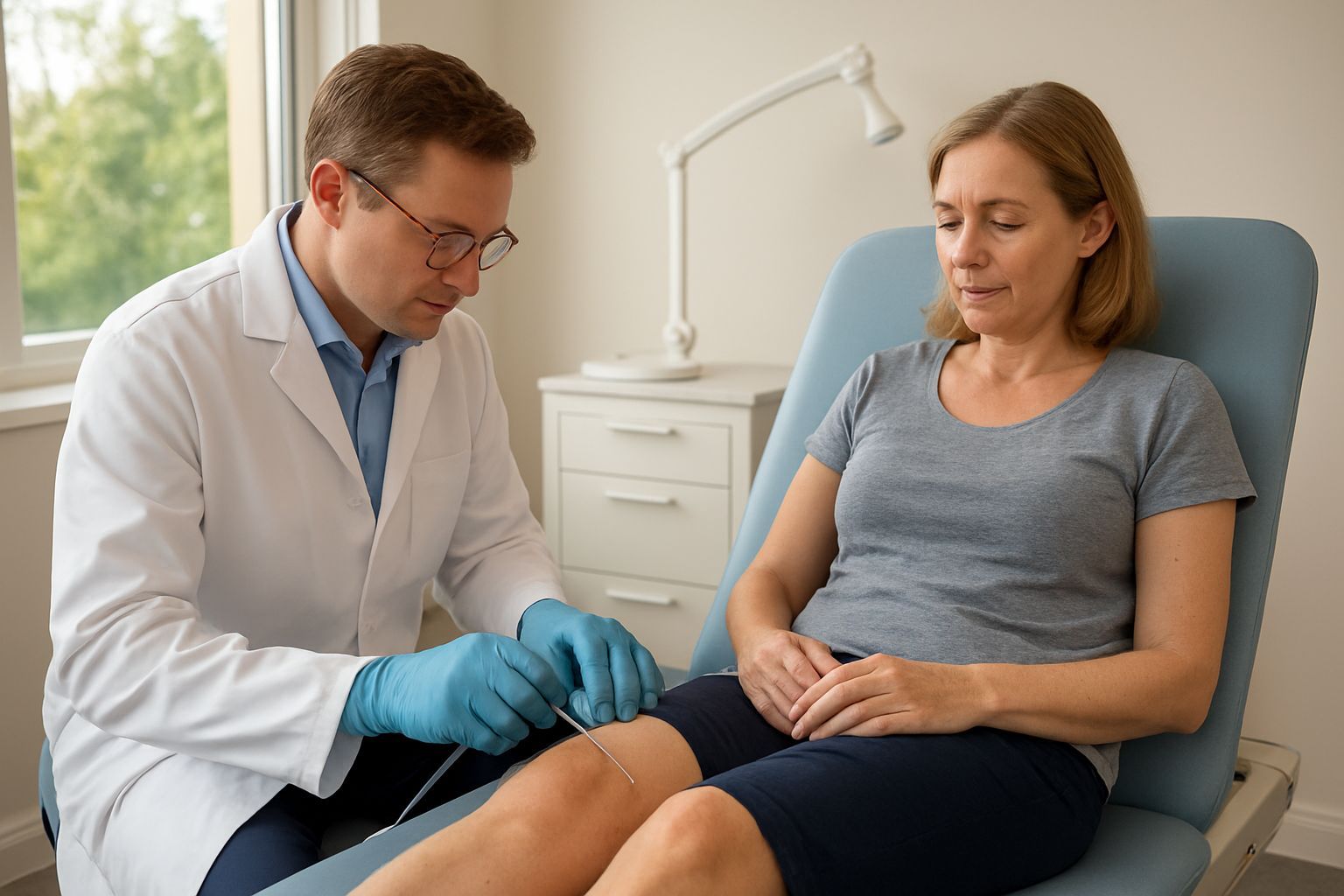
The scan is a duplex ultrasound of the leg veins. It shows each vein on screen and tests whether it squashes flat under gentle pressure, which a clotted vein will not. It is painless and takes around 20 to 30 minutes. Our page on deep vein thrombosis risk factors explains how the condition develops and who is most likely to get it.
Anticoagulant Treatment for a Blood Clot in the Leg
Almost everyone with a confirmed DVT is treated with an anticoagulant. These medicines are often called blood thinners, although they do not actually make the blood thinner. They slow the clotting process, so the existing clot stops growing and the body has time to break it down and reabsorb it.
Which medicines are used
Most people in the UK are prescribed a direct oral anticoagulant, usually apixaban or rivaroxaban, taken as tablets at home. Others, including people with severe kidney problems, some cancers or specific blood conditions, may be given injections of low molecular weight heparin or tablets of warfarin, which needs regular blood tests. Your doctor chooses the medicine based on your health, other medicines and personal circumstances.
How long treatment lasts
NICE recommends at least three months of anticoagulation for a confirmed DVT. If the clot had a clear temporary cause, such as an operation or a broken leg in plaster, treatment often stops at that point. If no cause was found, or there is an ongoing risk, your doctor may suggest continuing for longer, sometimes indefinitely. This decision is reviewed at around three months, and our overview of how DVT is treated summarises the options.
Living with anticoagulants
The main side effect of any anticoagulant is bleeding. Expect to bruise more easily and to bleed a little longer from small cuts. Tell any dentist, pharmacist or surgeon that you are taking one, and check before buying painkillers, because some anti-inflammatory medicines raise the bleeding risk. Seek urgent help if you notice black stools, blood in your urine, vomiting blood or a severe headache.
What Recovery Feels Like in the First Weeks
Most people go home on the day of diagnosis and are encouraged to keep moving. Walking helps the calf muscles pump blood up through the veins and does not make the clot more likely to break off once treatment has started.
Pain usually eases within days, but swelling takes longer. It is common for the leg to swell by the evening for several weeks, and some people notice it for months. Raising the leg when you sit, and avoiding long periods of standing still, both help. Our lifestyle tips for vascular health cover simple habits that support circulation during recovery.
Many people ask about flying. Long journeys raise the risk of clots, so it is sensible to wait until you have been on treatment for a few weeks and to discuss any trip with the doctor managing your anticoagulation. When you do travel, walk in the aisle, flex your ankles and stay well hydrated.
Do Compression Stockings Help After a DVT?
Compression stockings used to be offered routinely after a DVT to prevent long-term problems. The evidence has changed, and NICE no longer recommends them for preventing post-thrombotic syndrome. They are still useful for some people.
If your leg stays swollen or uncomfortable after the first few weeks, below-knee graduated stockings can ease the swelling and the heavy, aching feeling. They should be properly measured and fitted, and your arterial circulation should be checked first, because compression can be harmful when the leg arteries are narrowed.
How long you wear them each day, and whether you need them at all, depends on how the leg settles. Our guide to how long to wear compression stockings covers fitting, daily wear and common mistakes.
Are Procedures Ever Needed for a DVT?
Most clots are treated with medicine alone. A small number of people need more than tablets, and these decisions are made by hospital specialists, usually in the first days after diagnosis. Vascular surgeons are often part of that team, and our article on how a vascular surgeon can help describes the wider role they play.
Clot-dissolving treatment
People with a large clot in the main veins of the thigh and pelvis, known as an iliofemoral DVT, may be considered for catheter-directed thrombolysis. A thin tube delivers clot-dissolving medicine directly into the clot. It carries a higher bleeding risk than tablets, so it is reserved for selected patients with severe symptoms and a low risk of bleeding.
Vena cava filters
An inferior vena cava filter is a small device placed in the main vein in the abdomen to catch clots before they reach the lungs. NICE limits its use to people who cannot take anticoagulants, or who have further clots despite treatment. Filters are usually removed once they are no longer needed.
Post-Thrombotic Syndrome: When the Leg Does Not Fully Recover
A clot can damage the valves inside the deep veins as it heals. When those valves leak, blood pools in the lower leg, and months or years later the leg can ache, swell, feel heavy and itch. This long-term complication is called post-thrombotic syndrome. Patient information from Guy's and St Thomas' NHS Foundation Trust describes it as a chronic condition where treatment aims to control symptoms and protect the skin.
The skin around the ankle can darken and become dry and itchy, which is the same process behind varicose eczema . In more advanced cases, the skin breaks down into a venous ulcer that is slow to heal. Our page on leg ulcers and chronic venous insufficiency explains how these are managed.
Signs that it is worth asking for a specialist opinion include:
- swelling that has not settled six months after the clot
- aching or heaviness that gets worse as the day goes on
- new varicose veins on the same leg
- brown staining, eczema or hardened skin above the ankle
- a wound on the lower leg that has not healed within two weeks
A vascular surgeon can scan both the deep and surface veins to see where reflux is coming from. Sometimes leaking surface veins are adding to the pressure, and treating them can ease symptoms even when the deep veins are damaged.
Reducing the Chance of Another Clot
Studies suggest that roughly a quarter of people whose DVT had no obvious cause will have another clot within five years of stopping treatment, which is why the length of anticoagulation is reviewed so carefully. The risk is much lower after a clot with a clear temporary trigger.
Whatever caused your clot, some habits help. Keep active, avoid long spells of sitting without a break, stay a healthy weight and stop smoking if you smoke. Before any future operation or hospital stay, tell the team you have had a DVT so they can plan preventive treatment. If you have varicose veins on the same leg, mention them at your follow-up, because they can affect symptoms and are worth assessing once the acute clot has been treated.
Women who have had a clot should talk to their GP before starting or continuing contraception or hormone replacement that contains oestrogen, and before a future pregnancy, as these raise clotting risk.
Getting the Right Care After a DVT
DVT treatment usually means at least three months of anticoagulant tablets, staying active, and patience while the swelling settles. Most people recover well. A minority are left with a leg that stays swollen, heavy or discoloured, and that longer-term problem deserves its own assessment rather than being accepted as permanent.
The Vein Surgeons do not provide emergency care for a new clot, which should always go through 999, NHS 111 or your GP. Where we can help is afterwards, if your leg has not recovered as expected or you have varicose veins alongside a past DVT. You can book a consultation with one of our consultant vascular surgeons at three Nottingham hospitals without a GP referral.
Frequently Asked Questions
How long does it take for a DVT to go away?
Pain usually improves within a few days of starting anticoagulants, and most swelling settles over several weeks. The clot itself is broken down gradually over weeks to months. Some people have a degree of swelling for longer, particularly after a large clot in the thigh.
Can I exercise with a DVT?
Gentle walking is encouraged once treatment has started. Build up gradually and let pain guide you. Contact sports and activities with a high risk of falls or injury need more caution while you are taking an anticoagulant, so check with your doctor before returning to them.
Do I need to see a vascular surgeon after a DVT?
Not usually. Most clots are managed by a GP, a hospital anticoagulation clinic or a haematologist. A vascular surgeon's opinion is useful if the leg stays swollen or painful, if skin changes or ulcers appear, or if you have varicose veins that may be adding to the problem.
Is it safe to fly after a DVT?
Most people can fly once they have been on anticoagulant treatment for a few weeks and their symptoms are settling. Talk to your doctor before booking. On the flight, walk regularly, flex your ankles and stay hydrated.
Can varicose veins be treated after a DVT?
Often, yes, but the deep veins need to be assessed first. A duplex scan shows whether the deep veins have recovered and which surface veins are leaking. If the deep system is working well enough, treating the surface veins can reduce swelling and heaviness.