

Venous Leg Ulcers: Why They Won't Heal and How Treating the Veins Helps
A venous leg ulcer is an open wound on the lower leg, usually just above the ankle, that is slow to heal because of high pressure in the leg veins. Ulcers can take months to close, they often come back, and they affect sleep, mobility and confidence. Many people are treated with dressings and bandages for a long time without anyone looking at the veins that caused the wound in the first place.
This guide explains what a venous leg ulcer is, why it struggles to heal, how it differs from other leg wounds, and what the evidence says about treating the veins early. It is written for patients and families who want to understand the options, alongside the care they are already receiving from their GP or nurse.
What Is a Venous Leg Ulcer?
A venous leg ulcer is a break in the skin of the lower leg that has not healed within two weeks and is caused by poor blood flow in the veins. It typically sits on the inner side of the leg above the ankle, has a shallow, uneven edge and may weep fluid. The skin around it is often stained brown, dry and itchy, or hard and tight.
Venous disease is by far the most common cause of leg ulcers. The underlying problem is called chronic venous insufficiency: valves in the leg veins leak, blood falls back down the leg, and pressure in the veins around the ankle stays high when you are upright. Over years that pressure damages the skin and the tissue beneath it, until a small knock or scratch opens up and cannot close. Our page on leg ulcers and chronic venous insufficiency explains the condition in more detail.
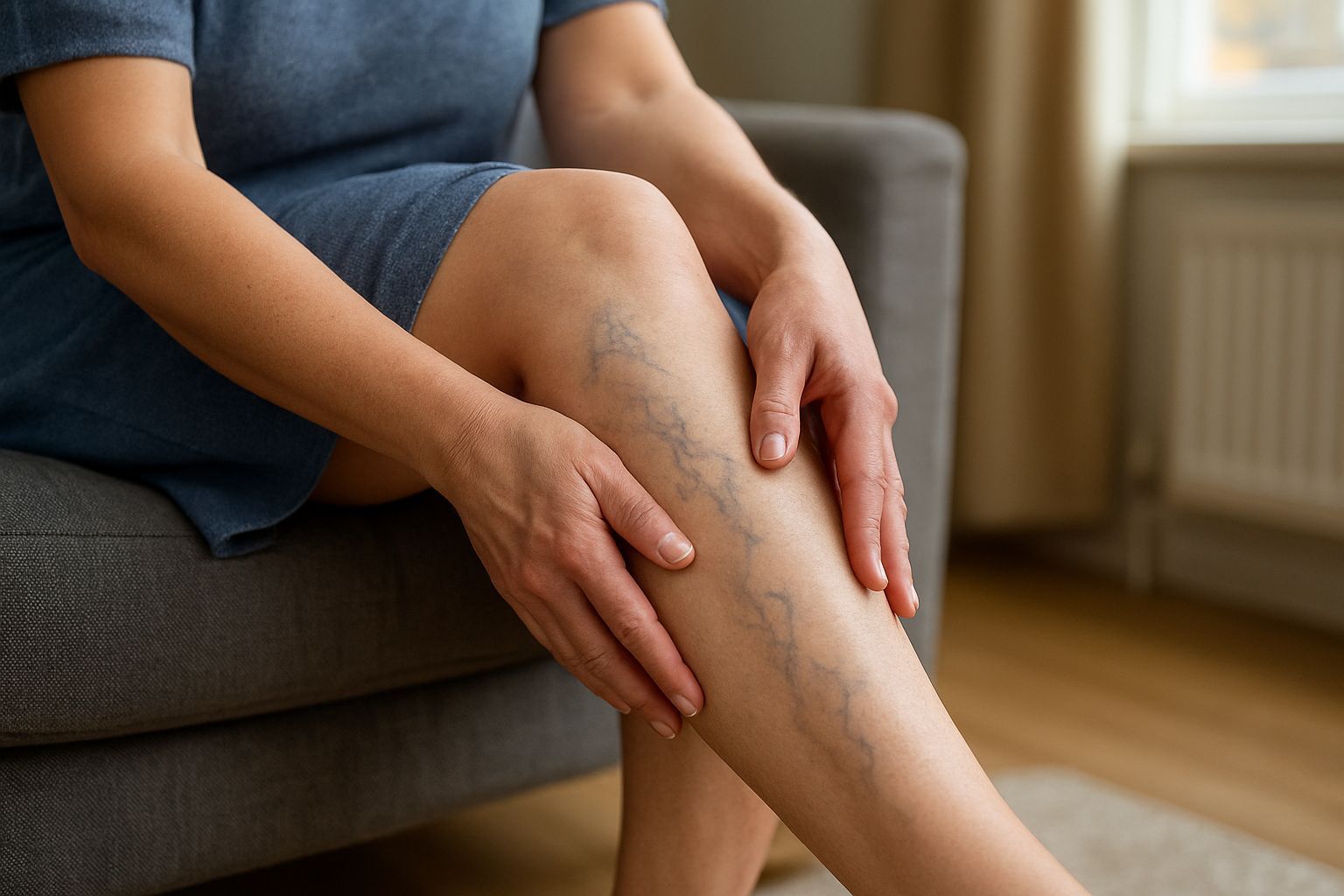
The leaking veins are often surface veins with visible varicose veins , but not always. Some people have reflux in veins that sit too deep to see, and others have damaged deep veins after a previous blood clot. Ulcers rarely appear without warning, and earlier skin changes such as varicose eczema are a common sign that the skin is under strain.
Why Venous Leg Ulcers Are Slow to Heal
A normal cut on the leg heals in a week or two. A venous ulcer struggles because the conditions around it work against healing every time you stand up.
High pressure in the veins pushes fluid and blood cells out into the tissue. The leg swells, oxygen and nutrients reach the skin less efficiently, and the area stays inflamed. Skin that has been under this pressure for years is also thinner and more fragile, so new tissue forms slowly and breaks down easily.
Several other factors can slow healing further. Infection, poor nutrition, diabetes, smoking, reduced mobility and a weak calf muscle pump all make a difference. So does any problem with the arteries, which is why checking the arterial circulation is part of every leg ulcer assessment. If you have been told your ulcer is "just slow", it is worth asking whether the veins underneath have been scanned. Our guide on when to worry about varicose veins explains how skin changes progress.
Venous vs Arterial Ulcers: How to Tell Them Apart
Not every leg ulcer is venous, and the difference matters because the treatments can be opposite. Compression helps venous ulcers heal, but strong compression on a leg with poor arterial blood flow can make things much worse.
Typical features of a venous ulcer
Venous ulcers usually sit around the inner ankle and lower calf, are shallow with irregular edges and produce moderate to heavy fluid. The leg is often swollen, with varicose veins, brown staining or hardened skin nearby. Pain tends to ease when the leg is raised.
Typical features of an arterial ulcer
Arterial ulcers are more often on the toes, heel, foot or shin. They tend to look punched out, with a pale or dry base, and the foot may be cold with weak or absent pulses. Pain is often worse when the leg is raised and better when it hangs down, and many people also get calf pain on walking. Our page on peripheral arterial disease explains this condition.
Some people have both. A simple test called the ankle brachial pressure index, comparing blood pressure at the ankle and the arm, helps decide how safe compression is. That is why a proper assessment comes before strong bandaging.
How Venous Leg Ulcers Are Treated
Treatment has three parts that work best together: looking after the wound, controlling the swelling, and dealing with the veins that caused the ulcer.
Compression bandaging
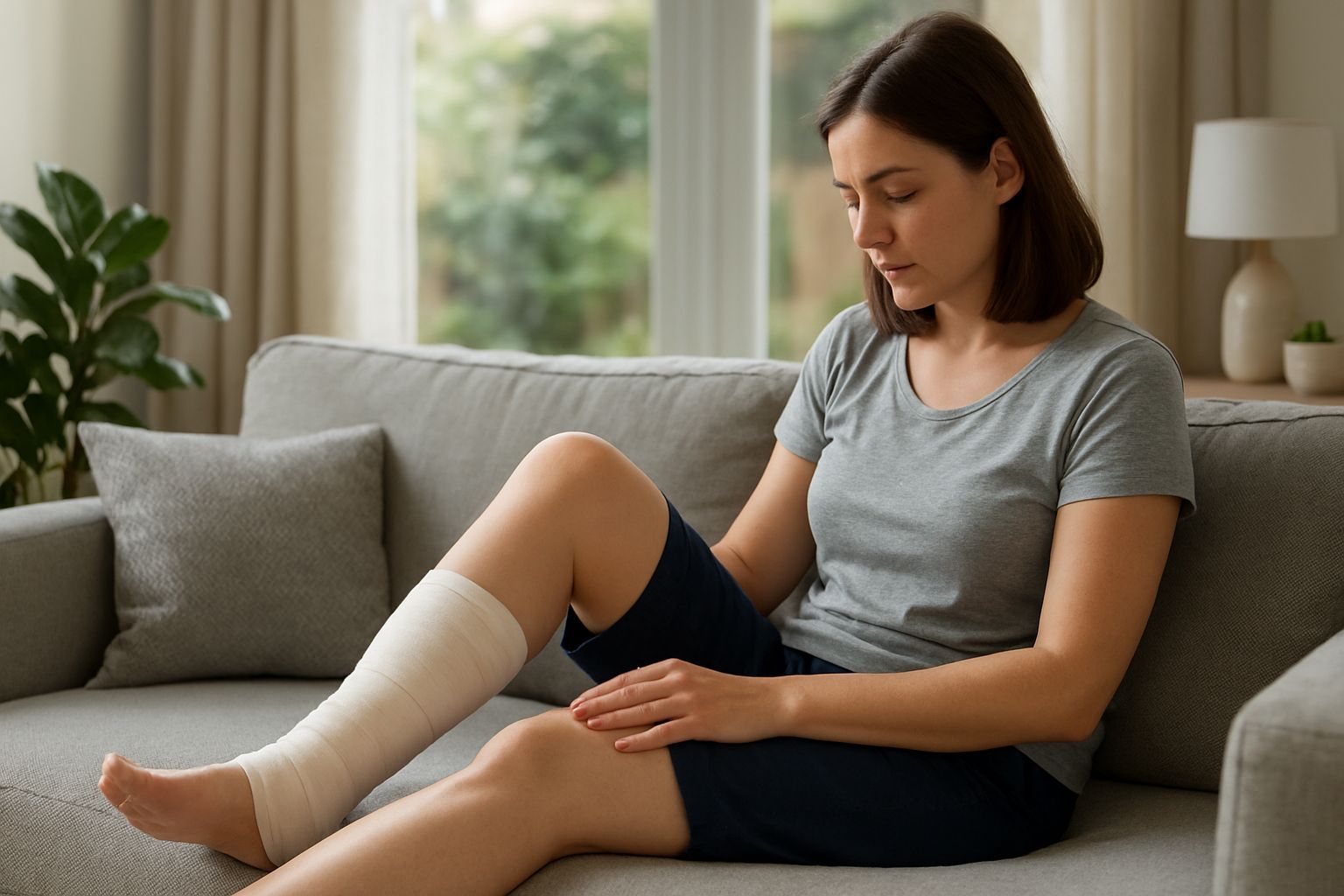
Compression is the foundation of treatment. A nurse trained in leg ulcer care applies firm, layered bandages or a compression system that pushes fluid out of the leg and supports the veins. The NHS advice on treating venous leg ulcers says that with appropriate treatment, they often heal within six months. Bandages are usually changed once or twice a week, and they can feel uncomfortable at first while the swelling goes down.
Wound care and daily habits
The ulcer is cleaned and covered with a simple, non-stick dressing. Raising the leg above the level of the heart several times a day and walking regularly to work the calf muscle both help. Keeping the surrounding skin moisturised, avoiding scratching and protecting the leg from knocks reduce the chance of further damage. Infection is treated with antibiotics when needed, but antibiotics do not heal the ulcer itself.
Treating the faulty veins
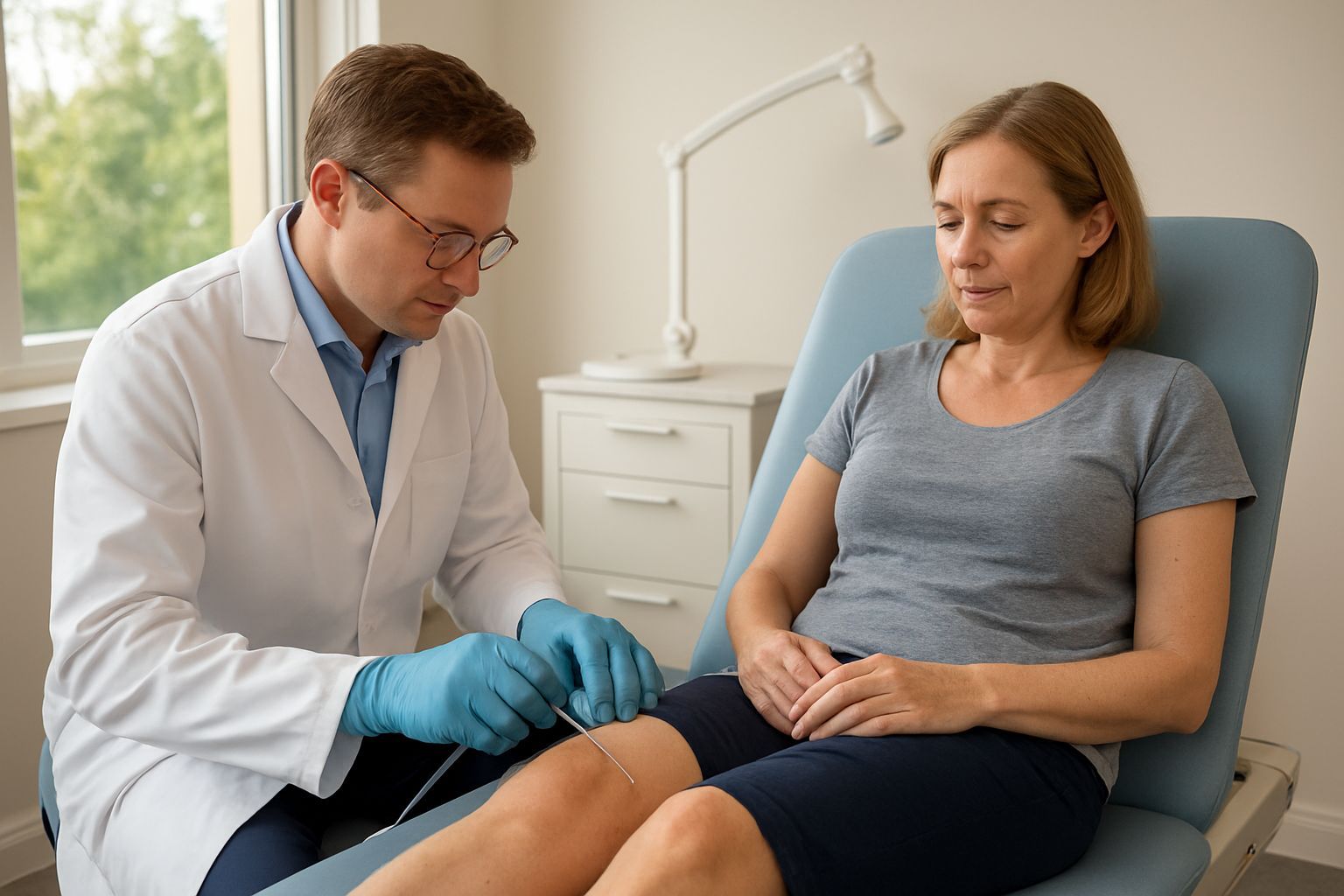
Compression manages the pressure while the bandage is on. Closing the leaking surface veins lowers it at the source. A colour duplex ultrasound scan shows which veins are refluxing, and treatments such as radiofrequency ablation and ultrasound-guided foam sclerotherapy can close them, usually as a day case under local anaesthetic. Our guide to minimally invasive varicose vein treatment describes these options.
What the Evidence Says About Early Vein Treatment
For many years, standard practice was to heal the ulcer with compression first and only think about the veins afterwards, if at all. A large UK trial changed that.
The EVRA trial, run across 20 NHS centres and published in the New England Journal of Medicine in 2018, randomly assigned 450 people with venous leg ulcers to one of two approaches. Everyone received compression and dressings. One group also had their superficial venous reflux treated within two weeks, while the other had vein treatment deferred until the ulcer had healed or for six months.
The results were clear. According to the trial's Health Technology Assessment report , median time to healing was 56 days with early vein treatment and 82 days with deferred treatment. At 24 weeks, 85.6% of ulcers had healed in the early group compared with 76.3% in the deferred group, and people treated early spent more time ulcer-free in the first year. The authors concluded that early treatment was highly likely to be cost-effective.
Two details from the trial are useful for patients. Foam sclerotherapy was the treatment used most often, which shows that closing the reflux matters more than the specific method, a point our comparison of radiofrequency ablation vs laser ablation also makes. And both groups did well, because they all received good-quality compression, so vein treatment adds to compression rather than replacing it. NICE guidance on varicose veins (CG168) also recommends referral to a vascular service for anyone with an active or healed venous leg ulcer.
Stopping an Ulcer Coming Back
Healing an ulcer is only half the job. Without changes to the pressure in the veins, venous ulcers have a strong tendency to return, sometimes within months.
Treating the leaking veins reduces the pressure behind the skin and is one of the most effective ways to protect a healed leg. Long-term compression stockings, worn every day while you are up and about, are the other main measure. Our guide to how long to wear compression stockings covers fitting and daily use, and your nurse can advise on the right strength.
Day-to-day habits help too, and they are easiest to keep up when they become part of your routine:
- moisturise the skin of your lower legs every day with an unperfumed emollient
- check your legs regularly for dry, itchy or discoloured patches
- walk daily to keep the calf muscle pump working
- raise your legs above heart level when you sit
- protect your shins from knocks, for example on furniture or car doors
If you have had a deep vein thrombosis in the past, mention it at your assessment, as our article on DVT treatment and recovery explains how damaged deep veins affect the skin.
Getting the Veins Behind an Ulcer Assessed
Venous leg ulcers are common, painful and slow to heal, but they are not inevitable or untreatable. Compression and good wound care remain the foundation, and strong evidence now shows that treating the leaking veins early helps ulcers heal faster and keeps legs ulcer-free for longer.
If you have a wound on your lower leg that has not healed in two weeks, or you have had an ulcer before, ask your GP or nurse about a duplex scan of the veins. The Vein Surgeons assess and treat the veins behind leg ulcers at three Nottingham hospitals, working alongside the dressing and compression care you receive from your own nurse. You can book a consultation with one of our consultant vascular surgeons without a GP referral.
Frequently Asked Questions
How long should a venous leg ulcer take to heal?
With appropriate compression and wound care, many venous leg ulcers heal within three to six months. Some heal faster and some take much longer. In the EVRA trial, treating the leaking veins early shortened median healing time from 82 days to 56 days compared with waiting.
Why does my leg ulcer keep coming back?
Venous ulcers return when the pressure in the leg veins stays high after the wound has healed. Treating the leaking veins and wearing compression stockings every day are the two most effective ways to prevent recurrence. Regular moisturising and protecting the skin from knocks also help.
Should I see a vascular surgeon about a leg ulcer?
Yes, if the ulcer is likely to be venous. NICE recommends referral to a vascular service for anyone with an active or healed venous leg ulcer, so the veins can be scanned and treated where appropriate. A vascular assessment also checks the arteries, which matters before strong compression is used.
Can varicose vein treatment heal a leg ulcer?
Treating the veins does not replace compression and wound care, but it addresses the cause. Closing leaking surface veins lowers the pressure in the skin around the ulcer, which helps it heal faster and reduces the chance of it coming back.
Is a leg ulcer an emergency?
Most leg ulcers are not emergencies, but they should be assessed promptly. Seek same-day advice if the skin around the ulcer becomes hot, red, swollen and more painful, if you feel feverish, or if the foot becomes cold, pale and very painful, as these can be signs of infection or a serious problem with blood supply.