

When to Worry About Varicose Veins: Warning Signs That Need Attention
Most varicose veins are a nuisance rather than a danger. They can look unsightly, ache after a long day and make you self-conscious in shorts, but plenty of people live with them for decades without any harm. A smaller group of people develop changes that mean the veins are no longer just a cosmetic issue, and knowing which changes those are helps you decide when to worry about varicose veins and when to simply keep an eye on them.
This guide goes through the warning signs in order of urgency, from symptoms worth a planned appointment to the few that need same-day help. If you are still trying to work out whether what you have are varicose veins at all, our guide to varicose veins symptoms is a better place to begin.
Are Varicose Veins Dangerous?
For the majority of people, no. Varicose veins are caused by leaking valves in the surface veins, and the surface veins carry only a small share of the blood returning from the legs. The deep veins do most of that work, so the body copes well even when surface veins are faulty.
The concern is what happens over many years. Blood that pools in the lower leg raises the pressure in the veins around the ankle. That pressure slowly affects the skin and the tissue under it, and in some people it leads to eczema, hardened skin and eventually ulcers. NICE estimates that between 3% and 6% of people who have varicose veins during their lifetime will develop a venous ulcer.
So the question is less "are my veins dangerous today?" and more "are they starting to affect my skin or my daily life?". The NHS overview of varicose veins makes a similar distinction, recommending a GP visit if the veins cause discomfort, if the skin over them changes, or if they bleed. Our article on what causes varicose veins explains the valve problem behind all of this.
Symptoms That Are Worth Getting Checked
These signs are not emergencies, but they suggest the veins are doing more than spoiling the look of your legs. They are good reasons to book a planned assessment.
Aching, heaviness and swelling
Legs that ache, throb or feel heavy by the evening, especially after standing, are the most common reason people seek help. Ankle swelling that leaves deep sock marks and goes down overnight follows the same pattern. If these symptoms interfere with work, sleep or exercise, treatment is likely to make a real difference. Our guide to heavy legs explains how a specialist tells venous heaviness apart from other causes.
Night cramps and restless legs
Cramps in the calf at night and an urge to keep moving the legs in the evening are common in people with varicose veins. They have many other causes, so they are not proof of a vein problem, but if they arrive alongside visible veins and swelling, they are worth mentioning.
Veins that are getting bigger
Varicose veins tend to progress slowly. Veins that are visibly larger or more widespread than they were a year or two ago suggest the reflux is spreading down the leg. Treating at that stage is usually simpler than waiting for skin changes.
Skin Changes Around the Ankle
Changes in the skin are the clearest sign that varicose veins have moved beyond a cosmetic problem. They show that pressure in the veins has been high for some time and that the skin is starting to suffer.
Itchy, dry or stained skin
The earliest change is usually itchy, dry, flaky skin around the inner ankle, which is varicose eczema . Brown or purple staining can follow, caused by iron from red blood cells that have leaked into the skin. On darker skin the change can look grey or deep brown rather than red.
Hardening above the ankle
Later, the skin just above the ankle may become hard, tight and tender, a condition called lipodermatosclerosis. Small white scar-like patches can appear too. Skin at this stage is fragile, and a small knock can turn into a wound that will not heal. NICE guidance (CG168) recommends referral to a vascular service for anyone with skin changes of this kind, even if the veins themselves are not very visible.
Leg Ulcers and Wounds That Will Not Heal
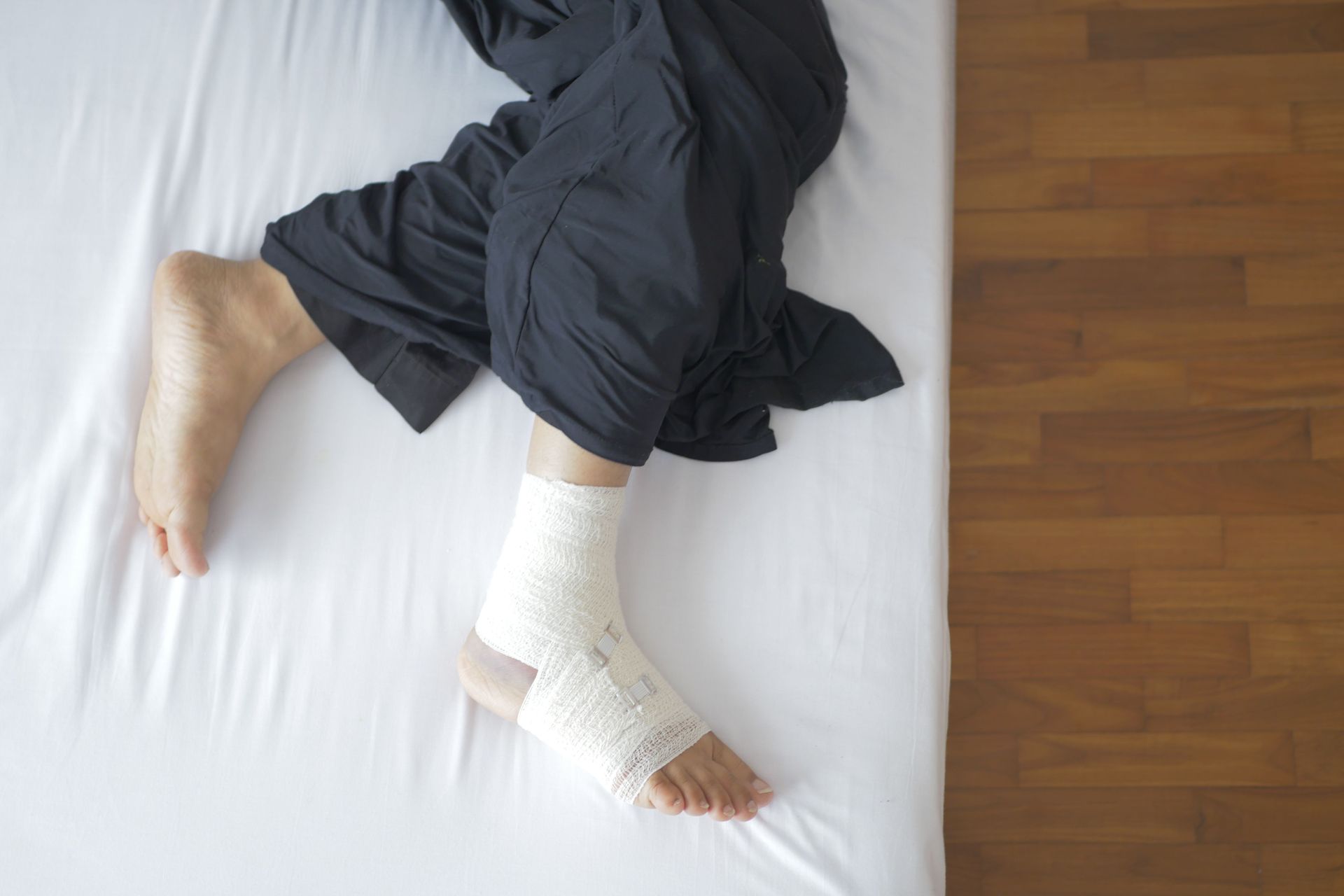
A venous leg ulcer is an open wound, usually on the inner side of the lower leg just above the ankle, that takes more than two weeks to heal. It may weep, smell, or be surrounded by stained or hardened skin. Ulcers can be painful and can take months to heal without the right care.
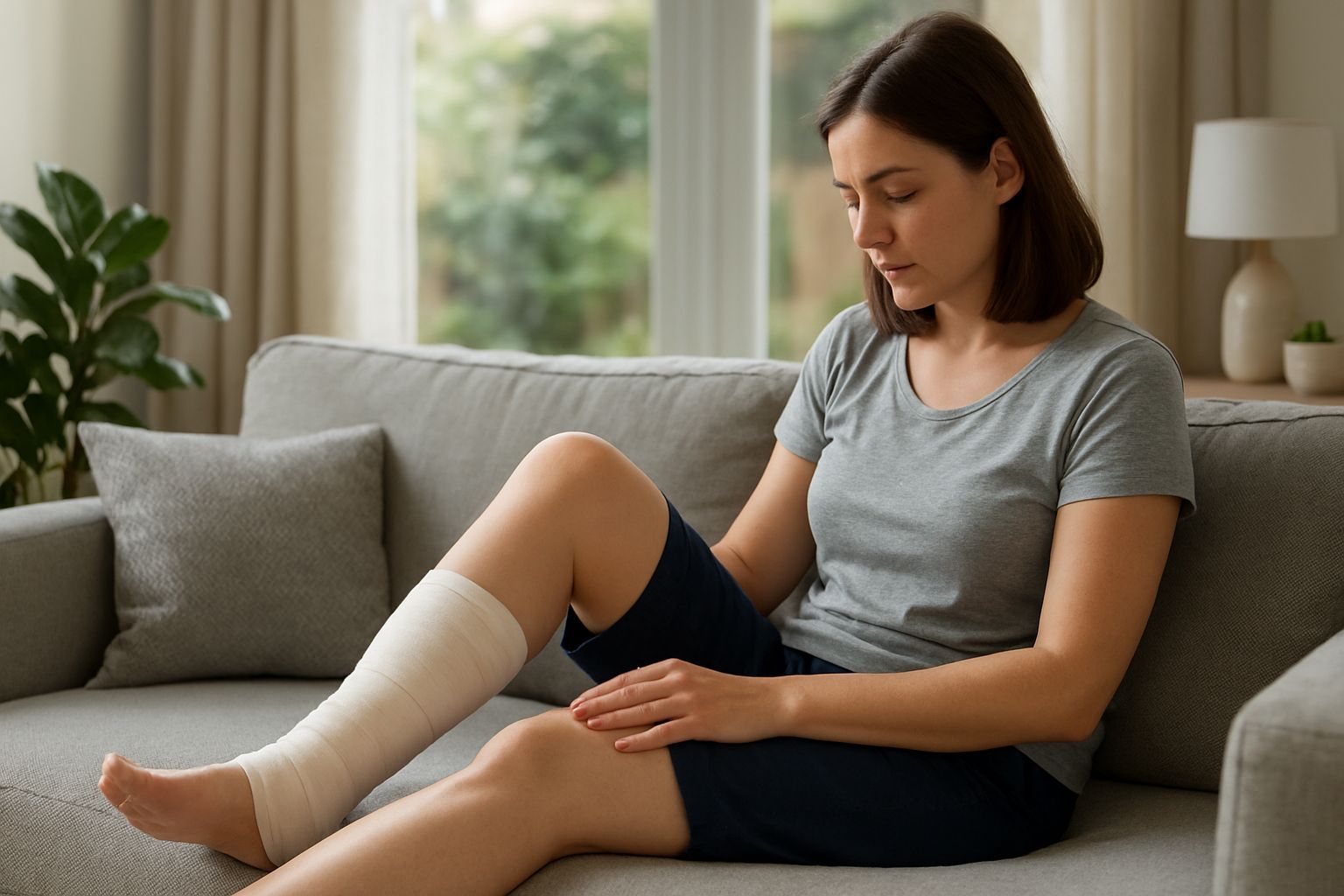
Compression bandaging, applied by a trained nurse, is the main treatment for an active ulcer. Treating the varicose veins underneath also matters. Closing the leaking vein lowers the pressure in the skin, which helps ulcers heal and makes them less likely to come back.
If you have a wound on your lower leg that has not healed in two weeks, see your GP or practice nurse. Our page on leg ulcers and chronic venous insufficiency explains how we assess and treat them, and our guide to venous leg ulcers that won't heal covers what the research says about treating the veins early.
Hard, Painful or Inflamed Veins
Sometimes a varicose vein suddenly becomes hard, red, hot and tender to touch, often with a lump you can feel under the skin. This is superficial thrombophlebitis, where blood has clotted inside a surface vein.
It is usually not dangerous on its own, and it often settles over a few weeks with simple painkillers and keeping active. It still needs to be checked within a day or two. A clot in a surface vein can sit close to where it joins the deep veins, especially high on the inner thigh, and some people with superficial thrombophlebitis also have a deep vein thrombosis . An ultrasound scan shows whether the clot is safe to manage at home or needs treatment with an anticoagulant.
Repeated episodes of thrombophlebitis in the same leg are a good reason to have the underlying varicose veins assessed and treated.
When to Seek Urgent Help
A few situations need same-day action. These are uncommon, but it is worth knowing them in advance so you can act quickly:
- A bleeding varicose vein. Lie down, raise the leg above the level of your heart and press firmly on the bleeding point with a clean pad for at least 10 to 15 minutes. If it does not stop, call 999. Once it has stopped, see your GP or a vascular specialist soon, because veins that have bled once can bleed again.
- Sudden pain and swelling in one calf or thigh. This can be a blood clot in a deep vein. Call NHS 111 or ask your GP for an urgent appointment.
- Leg symptoms with chest pain or breathlessness. Call 999 straight away, as a clot may have reached the lungs.
- A hot, red, spreading area of skin with fever. This may be cellulitis and needs the same-day attention of a GP or urgent care service.
Our guide to the first signs of a blood clot in the leg explains how a DVT is recognised and diagnosed.
Bleeding is more likely when the skin over a vein is thin and shiny or has a small blue bump on it. If you notice that kind of change, mention it to your doctor before it bleeds.
What Happens at an Assessment
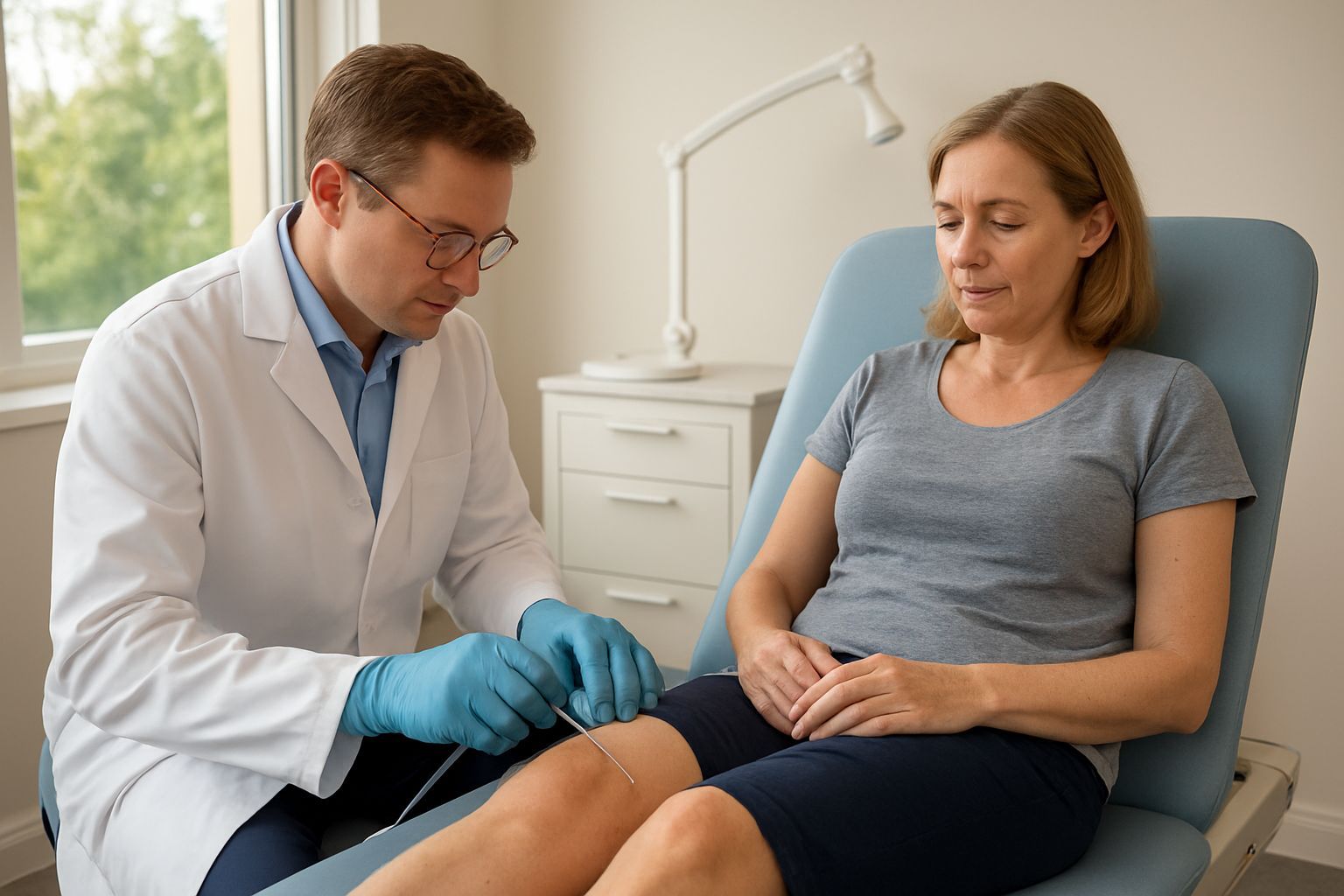
A vascular assessment starts with your symptoms, medical history and any previous vein treatment or blood clots. The surgeon examines both legs while you stand, looking for visible veins, swelling and skin changes.
The key test is a colour duplex ultrasound scan. It shows which valves are leaking, where the reflux starts and whether the deep veins are healthy. That information decides whether treatment is worthwhile and which method suits your veins. Most varicose veins can be treated as a day case using radiofrequency ablation, foam sclerotherapy or phlebectomy, all explained in our guide to minimally invasive varicose vein treatment .
If you have varicose veins without symptoms or skin changes, it is perfectly reasonable to leave them alone and keep watching. Many people choose treatment for comfort or appearance, and that is a valid reason too, but it is a choice rather than a medical necessity. If cost is part of that decision, our guide to varicose vein treatment cost in the UK sets out typical private prices.
Knowing When to Act
Varicose veins are worth worrying about when they start to affect your skin, your comfort or your daily life. Itchy or stained skin around the ankle, hardening above the ankle, wounds that will not heal and repeated painful, inflamed veins all mean it is time for an assessment. Bleeding and sudden one-sided swelling need same-day help.
If your varicose veins have started to cause any of these problems, a duplex scan with a consultant vascular surgeon can show what is happening and what can be done. You can book a consultation with The Vein Surgeons at one of our three Nottingham hospitals, and our pricing and insurance page explains consultation fees and the insurers we work with.
Frequently Asked Questions
Can varicose veins cause a blood clot?
Varicose veins can lead to superficial thrombophlebitis, a clot in a surface vein, which causes a hard, red, tender vein. They are also linked with a somewhat higher risk of deep vein thrombosis, although the risk for any one person remains low. Sudden swelling and pain in one leg should always be checked the same day.
Should I worry if my varicose veins are getting bigger?
Gradual enlargement is common and does not mean danger, but it shows the reflux is progressing. It is a reasonable point to have the veins assessed, particularly if you also have aching, swelling or skin changes, because treatment is usually simpler before the skin is affected.
What should I do if a varicose vein bursts?
Lie down, raise your leg above heart level and press firmly on the spot with a clean pad or cloth for 10 to 15 minutes without lifting it to check. Call 999 if the bleeding does not stop. Afterwards, arrange to have the vein assessed, because it is likely to bleed again without treatment.
Are varicose veins a sign of heart problems?
Not usually. Varicose veins are caused by faulty valves in the leg veins rather than a problem with the heart. Swelling in both legs together with breathlessness or rapid weight gain is different and can be a sign of heart, kidney or liver problems, so that combination should be checked by your GP.
Is it safe to leave varicose veins untreated?
For many people, yes. If your veins are not causing symptoms or skin changes, there is no medical need to treat them. Keep an eye out for itching, staining or hardening of the skin around the ankle, wounds that will not heal, and bleeding, as these are signs that treatment is now advisable.