
Varicose Veins Symptoms: Early Signs, What They Feel Like and What They Mean
Varicose veins are usually easy to see: blue or purple veins that bulge and twist under the skin of the legs. What surprises many people is how much they can be felt before they are obvious, and how varied the symptoms are. Some people have large veins and no discomfort at all. Others have only a few faint veins but legs that ache and swell every evening.
This guide describes the common varicose veins symptoms, the early signs that are easy to miss, how symptoms change through the day and the year, and which ones are worth getting checked. It is based on what patients most often describe to a vascular surgeon at a first appointment.
What Varicose Veins Look Like
Varicose veins are enlarged surface veins, usually wider than 3 millimetres, that rise above the skin and follow a winding, rope-like course. They are most common on the inside of the calf and thigh and at the back of the knee, because that is where the main surface veins run. When you stand they fill and bulge, and when you lie down with your legs raised they often flatten or almost disappear.
They are different from thread veins, also called spider veins, which are tiny red, blue or purple lines that sit flat in the skin. Thread veins rarely cause symptoms on their own, although they can appear alongside varicose veins or around the ankle when there is reflux deeper down. Our guide to spider veins vs varicose veins explains the difference in more detail.
Between the two sit reticular veins, which are blue-green veins a little wider than thread veins and visible under the skin without bulging. All three come from problems with the valves in the leg veins, and our article on what causes varicose veins explains that process.
Common Symptoms of Varicose Veins
The NHS lists the main symptoms of varicose veins as aching, heavy and uncomfortable legs, swollen feet and ankles, burning or throbbing, muscle cramps at night, and dry, itchy and thin skin over the affected vein. Most people have some of these rather than all.
Aching and heaviness
A dull ache or a heavy, tired feeling in the calves is the symptom people mention most. It builds through the day and is usually worst in the evening or after standing for a long time. Raising the legs or lying down eases it, which is a useful clue that the veins are responsible. Our guide to heavy legs explains why that pattern points to the veins.
Swelling
Ankles and lower legs may swell by the end of the day, leaving deep marks from socks or making shoes feel tight. The swelling goes down overnight. If one leg swells far more than the other, or swelling appears suddenly, that needs a different kind of attention, covered later in this guide.
Throbbing, burning and itching
Some people feel throbbing or a burning sensation along the line of the vein, especially in warm weather. Itching over a varicose vein, or around the ankle, is common too. Persistent itching with dry, flaky skin can be the start of varicose eczema, which is a sign that pressure in the veins is affecting the skin.
Cramps and restless legs
Night cramps in the calf and an uncomfortable urge to move the legs in the evening are often reported by people with varicose veins. These symptoms have many other causes as well, so they are not proof of a vein problem by themselves.
Early Signs That Are Easy to Miss
Varicose veins often start quietly, and the earliest signs can be dismissed as ordinary tiredness. Being aware of them helps you spot a developing problem before the veins become large or the skin is affected.
Look out for:
- legs that feel heavier at the end of a working day than they used to
- sock marks around the ankles that are deeper on one side
- a cluster of fine veins around the inner ankle or the side of the foot
- one vein on the calf or behind the knee that bulges when you stand but flattens when you lie down
- an itchy patch on the lower leg that keeps coming back
Some people have symptoms without visible varicose veins. The main surface veins run deep in the fat of the thigh and calf, and they can leak for years before anything shows. If your legs ache and swell in the classic pattern but look fairly normal, a duplex ultrasound scan can still find the problem. The same applies to veins that return after earlier treatment, which our article on recurrent varicose veins covers.
How Symptoms Change Through the Day and the Year
Timing is one of the most useful things to notice about varicose veins symptoms, because it helps separate a vein problem from other causes.
Vein symptoms are usually mild in the morning and get steadily worse through the day as gravity pulls blood down into the legs. They are worse after long periods of standing still, better after a walk and much better when you put your feet up. Many people find a week of noting when their legs feel worst makes their first appointment far more productive.
Heat makes things worse, because warm temperatures widen the veins. Symptoms often flare in summer, on holiday, after a hot bath or in a heated office. In women, symptoms can also vary with the menstrual cycle and often get worse in pregnancy. Cold weather tends to ease swelling, though winter brings its own changes, which our article on cold weather and varicose veins explains.
Symptoms That Suggest the Skin Is Being Affected
Over many years, raised pressure in the leg veins can start to affect the skin around the ankle. These changes are a sign that varicose veins are doing more than causing discomfort, and they are worth an assessment even if the veins themselves are not very large.
Discolouration and eczema
The skin around the inner ankle may become itchy, dry and inflamed, which is varicose eczema . Brown or purplish staining can develop as iron from leaked red blood cells settles in the skin. On darker skin the change may look grey or deep brown rather than red.
Hard, tight skin and ulcers
The skin just above the ankle can become hard, tight and tender, and the lower leg may narrow while the calf stays full. Skin like this is fragile, and a small knock can turn into a wound that will not heal. A wound on the lower leg that has not healed in two weeks may be a venous ulcer, and our page on leg ulcers and chronic venous insufficiency explains how they are treated.
NICE guidance on varicose veins (CG168) recommends referral to a vascular service for anyone with these skin changes, as well as for anyone whose varicose veins cause symptoms such as pain, aching, swelling or itching.
When Symptoms Need Prompt Attention
Most varicose veins symptoms can be assessed at a planned appointment. A few need faster action:
- A varicose vein that bleeds. Lie down, raise the leg and press firmly on the spot for 10 to 15 minutes, and call 999 if it does not stop.
- A vein that suddenly becomes hard, red, hot and painful. This may be superficial thrombophlebitis and should be checked within a day or two.
- Sudden pain and swelling in one calf or thigh. This can be a deep vein thrombosis and needs same-day assessment through NHS 111 or your GP.
Chest pain or breathlessness alongside leg symptoms means calling 999 straight away. Our guides on when to worry about varicose veins and the first signs of a blood clot in the leg go through these situations in more depth.
These are uncommon. For most people, symptoms build slowly, and the question is not whether it is an emergency but whether the veins are affecting daily life enough to make treatment worthwhile.
What Happens When You Get Symptoms Checked
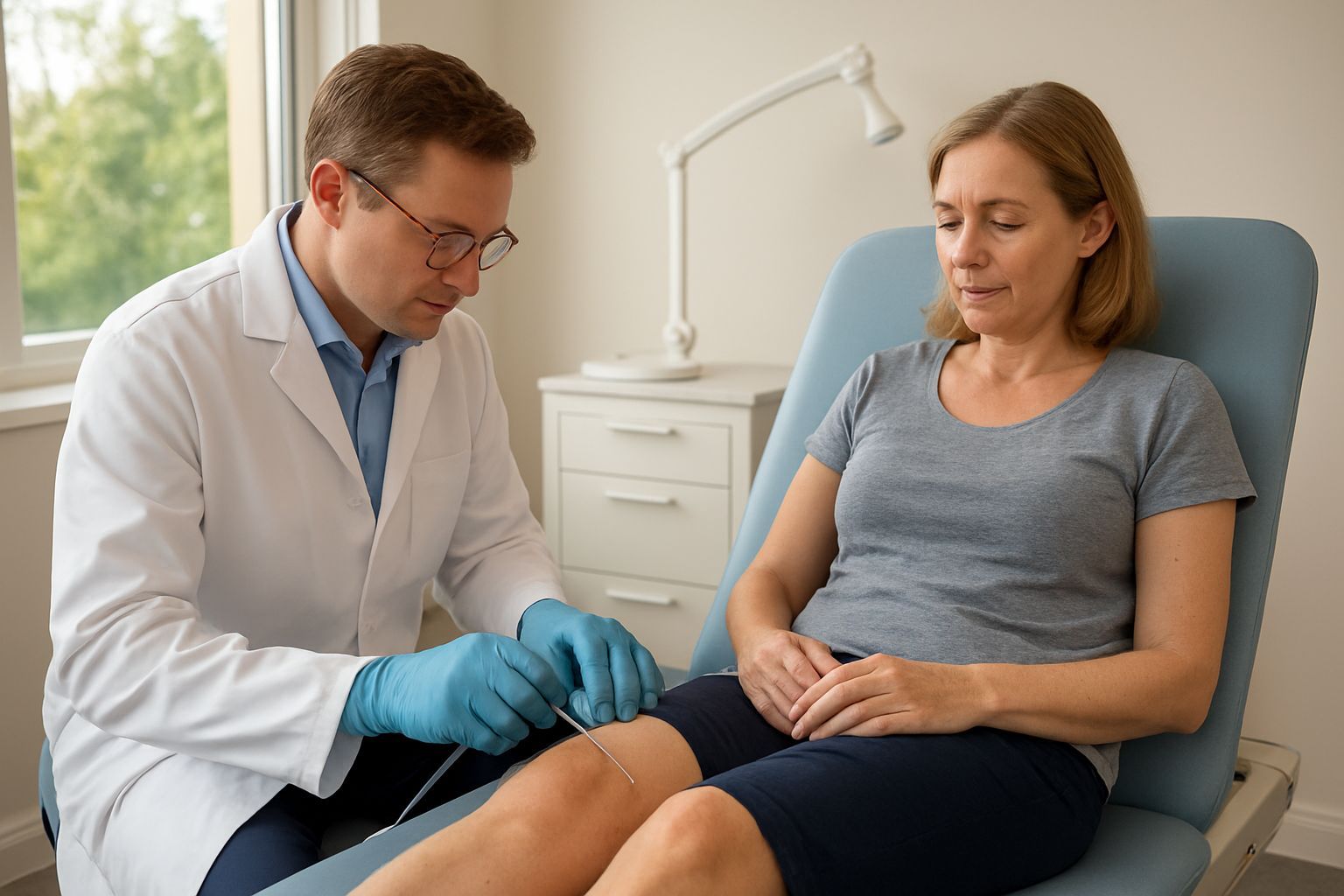
A vascular assessment begins with a conversation about your symptoms: what they feel like, when they happen and what makes them better or worse. The surgeon then examines your legs while you stand, looking at the veins, any swelling and the skin around the ankles.
The most important part is a colour duplex ultrasound scan, which shows the direction of blood flow in each vein and pinpoints which valves are leaking. This matters because the vein causing the problem is often not the one you can see. With that map, the surgeon can explain whether treatment would help and which method suits your veins.
Most varicose veins can be treated as a day case with radiofrequency ablation, foam sclerotherapy or phlebectomy, and symptoms such as aching and heaviness often improve within weeks. Our page on varicose vein treatment in Nottingham explains each option, our guide to recovery after varicose vein treatment covers the weeks afterwards, and our guide to varicose vein treatment cost in the UK explains how prices are worked out.
Listening to What Your Legs Are Telling You
Varicose veins symptoms range from barely noticeable to genuinely disruptive. Aching, heaviness and evening swelling that ease when you raise your legs are the classic signs. Itching, staining or hardening of the skin around the ankle mean the veins are starting to affect the skin, and bleeding or sudden one-sided swelling need prompt help.
If your symptoms have been building for a while, a duplex scan with a consultant vascular surgeon can show what is causing them and whether treatment would help. You can book a consultation with The Vein Surgeons without a GP referral, and our surgeons' profiles let you see who you would be seeing.
Frequently Asked Questions
What are the first signs of varicose veins?
Early signs include legs that feel heavy or achy by the evening, mild ankle swelling, and a vein that bulges when you stand but flattens when you lie down. Some people first notice fine veins around the ankle or an itchy patch on the lower leg that keeps coming back.
Can you have varicose vein symptoms without visible veins?
Yes. The main surface veins run deep in the fat of the leg and can leak for years before they bulge at the surface. If your legs ache and swell in the typical pattern, a duplex ultrasound scan can show whether there is reflux even when the leg looks normal.
Why do my varicose veins hurt more at night?
Symptoms build through the day as blood pools in the legs, so many people feel them most in the evening. Night cramps and restless legs are also common with varicose veins. Raising your legs for 15 to 20 minutes in the evening and walking during the day can help.
Are itchy varicose veins a bad sign?
Itching over a varicose vein is common and not dangerous in itself. Persistent itching around the ankle with dry, flaky or discoloured skin can be varicose eczema, which means pressure in the veins is affecting the skin. That is worth having assessed.
Do varicose veins symptoms get worse with age?
They often do, because varicose veins tend to progress slowly over the years and the skin becomes more vulnerable with age. Not everyone gets worse, though, and many people have stable veins for decades. Changes in the skin around the ankle are the main sign that progression is becoming a problem.